Planning glamping in Scandinavia sounds dreamy until you realize how much the month you choose changes everything. In December you might get four to six hours of daylight and serious frost; in June you could watch the midnight sun from a glass dome and barely sleep at all. Prices swing just as hard, with peak summer rates often far above what the same unit costs in May or September.
This month-by-month guide walks through the whole picture: why timing matters so much here, what summer from June to August really offers, why May and September are the smart shoulder months, and when winter glamping in Lapland makes sense. We also break down how to choose your month by the experience you want, plus realistic booking windows and budgeting tips, before pulling it all together so you can pick the perfect Scandinavian glamping month with confidence.
Why Timing Matters for Glamping in Scandinavia
Scandinavia is one of the few places where the calendar genuinely decides what your glamping trip will be. Daylight is the biggest factor: in December you may only get about 4-6 hours of usable light, while June delivers nearly 24 hours in much of the region. That difference shapes everything from how long your hikes can be to whether you can read a book outside at 11 pm.
Daylight changes your whole itinerary
With long summer nights, you can hike late, swim after dinner and never worry about headlamps. In deep winter, you plan around short, precious daylight hours, but you gain something summer cannot offer: dark skies for aurora watching from your tent or dome. Neither option is better, they are simply different trips.
Prices move with the seasons
The same dome or cabin can cost 150-350 EUR per night in July, then drop 20-40% in May or September. If your dates are flexible, shifting your trip by a few weeks is the easiest way to save without giving up much comfort.
Weather windows also differ sharply between regions. Mild fjord summers in Norway are a world away from Lapland winters, where temperatures can fall to -30°C. Match your month to both the region and the activities you actually want.
Summer: June to August, the Classic Season
June to August is the classic season for glamping in Scandinavia, and for good reason. This is when the region feels most generous: long days, mild temperatures and every site operating at full capacity. If it is your first glamping trip here, summer is the safest bet.
The midnight sun months
June and July bring nearly endless daylight above the Arctic Circle, with the midnight sun lasting roughly from late May to mid-July. Falling asleep can be a real challenge, so pack an eye mask. The upside is enormous: you can hike, kayak or simply sit outside your dome at 11 pm in full daylight.
Why August is the insider pick
August keeps the warm weather and adds swimmable lakes at their warmest of the year, while mosquitoes are noticeably fewer than in June. Crowds start thinning too, especially toward the end of the month, and early autumn light makes photos softer and more atmospheric.
The trade-off is price and availability. Expect peak rates of 150-350 EUR per night for popular domes and cabins, and expect the best units to fill early. The reward is the widest choice of sites of any season, from fjord-side tents to forest cabins across Norway, Sweden and Finland.
Shoulder Months: May and September
If summer prices make you wince, look at May and September. These shoulder months deliver noticeably lower rates than July for the same units, and they come with a different, quieter kind of Scandinavian magic. You trade peak-season reliability for savings, thinner crowds and a front-row seat to the seasons changing.
May: the awakening month
May combines blooming landscapes with waking wildlife, as migratory birds return and animals become active after the long winter. Days are already long and bright, trails are opening up, and you get a sense of having the outdoors almost to yourself. For travelers who want nature without peak-season prices, May is hard to beat.
September: colors and early auroras
September delivers autumn colors in fiery reds and golds, and as nights darken again, you get early chances of seeing the northern lights, especially the further north you go. Crowds are thinner after the school holidays end, and lakes and forests feel calm rather than busy.
Both months suit travelers who want the full glamping experience, a warm dome, a beautiful view and easy access to nature, while keeping a meaningful chunk of their budget. Check that your chosen site is open outside high season, as some smaller operators run shorter seasons, but many of the best units stay available year-round and cost noticeably less in these months.
Winter Glamping: December to March
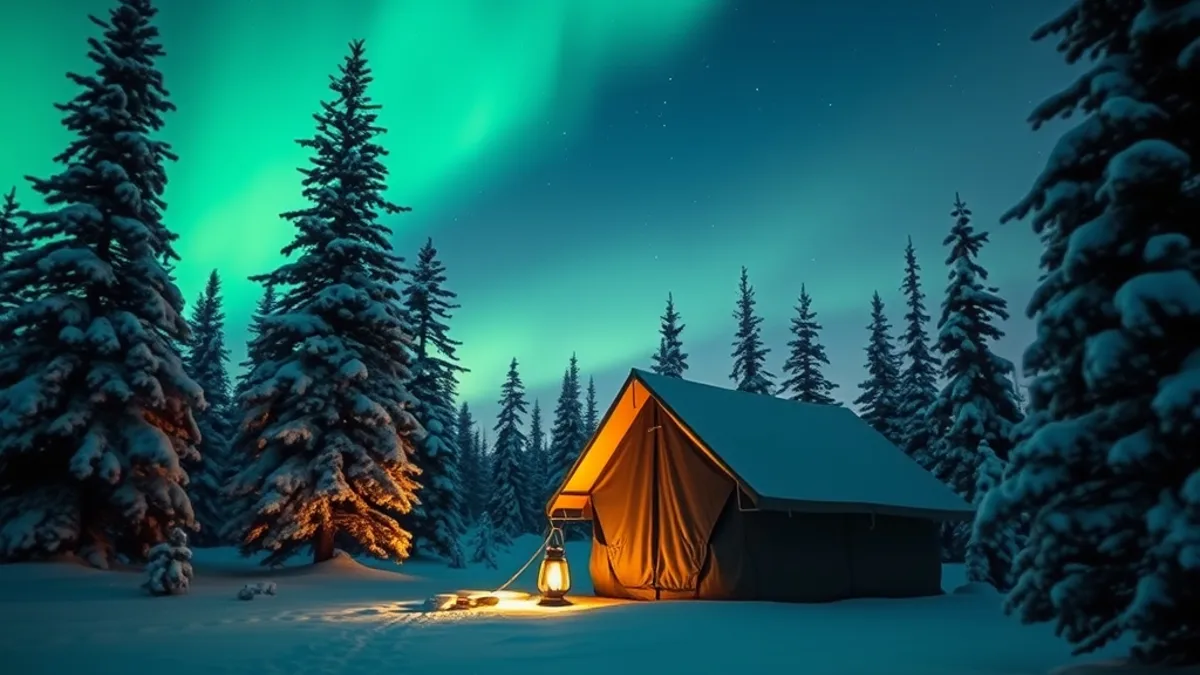
Winter glamping in Scandinavia is all about one thing: the northern lights. Lapland, stretching across northern Norway, Sweden and Finland, has become famous for its glass-roofed domes, and for good reason. You lie in a warm bed, look straight up through the clear panel above you, and wait for green ribbons to appear. On a dark, cloudless night between December and March, it is an experience few hotels can match.
Timing matters even within the winter season. Solar activity tends to peak in October and again in February and March, so those windows often deliver the strongest displays. December and January trade slightly weaker aurora odds for deep snow, which many travelers consider part of the magic. Keep in mind that clear skies matter as much as solar activity, so a stay of several nights gives you better chances than a single night.
This is also the most demanding season to pack for. Inland Lapland regularly sees temperatures down to -30°C, and even heated units feel the difference when you step outside for a sauna or a hot tub. Before you book, confirm that the unit is genuinely winterized, not just a summer dome with an electric heater bolted on.
- Ask specifically about insulated floors and whether the glass roof has a defrosting function, since frost build-up can block your view of the sky.
- Plan indoor-friendly activities as backup, such as saunas, snowshoe rentals or husky visits, because heavy cloud can hide the aurora for a night or two.
- Bring layered clothing rated for serious cold, including insulated boots and gloves, since many sites are remote and shops are not around the corner.
- Check how the site handles arrival in deep snow, as some locations are reached by snowmobile transfer or a short walk from a parking area.
Choosing Your Month by Experience
With such different seasons on offer, the easiest way to pick your month is to start with what you actually want to do. A photographer chasing the aurora needs a completely different trip than a family planning fjord hikes. A couple celebrating an anniversary in a glass-roofed dome has different needs again, from heating and privacy to how dark the skies really are at night. Work through the three goals below and match them to your travel window before you fall in love with a specific site or unit.
- If hiking and fjords are the priority, aim for June to August. Trails are snow-free, boat trips and mountain huts run at full capacity, and the long daylight hours let you start hikes late and still finish in sunshine. This is also when kayaking, glacier walks and wildlife safaris run their fullest schedules, so you can build a whole week of activities without long gaps.
- If the northern lights are the priority, pick October or a stay in February or March. These periods combine peak aurora activity with workable temperatures, and October lets you pair the lights with autumn colors before deep winter sets in. Ask operators about aurora alerts, cloud-cover forecasts and backup activities, because a clear night is never guaranteed even in the best months.
- If value and quiet are the priority, choose May or September. You get lower rates than the July peak, thinner crowds at popular viewpoints, and conditions that are still genuinely pleasant for being outdoors. September adds early aurora chances, while May brings blooming landscapes and waking wildlife.
Once you know which category fits your trip, the rest of the planning becomes simple. Your chosen goal determines both the month and the type of unit you should look for, whether that is a fjord-side tent in summer or a heated dome under dark winter skies. It also shapes your booking timeline, since the most sought-after units disappear first. Write down your top two priorities, check which months suit both, and then contact a shortlist of sites to compare availability before committing.
Booking Windows and Budgeting
Scandinavian glamping rewards early planners. The most attractive units, the ones with the best views, the most privacy or the most unusual designs, are also the first to disappear from booking calendars. In practice, that means working backwards from your travel dates rather than browsing casually a few weeks before departure.
For a high-season summer trip, reserve your unit several months ahead. That gives you real choice between sites and layouts instead of accepting whatever is left. Aurora-viewing domes in Lapland are even tighter: they often need six months or more of lead time, because capacity is small and demand from winter travelers is steady. If your dates are fixed around a holiday period, treat that as your minimum and book as early as the calendar allows.
Budgeting is straightforward once you know your season. Peak-season rates for a dome or cabin vary by country, site and how much luxury is included, so check current prices directly with operators rather than relying on older listings. Shifting your trip to the shoulder months can bring meaningful savings, which over a week can cover flights or a couple of extra nights.
- Check what the rate includes before comparing sites, since meals, sauna access, activities and heating can differ significantly between similar-looking domes.
- Ask about minimum-stay requirements, which are common at small aurora sites during the darkest months and affect both price and flexibility.
- Review the cancellation terms carefully for winter bookings, as weather-related travel disruptions are more likely in remote Lapland than in summer.
- Factor in transfers to remote sites, since some locations sit far from airports and train stations, and shuttle costs add up over a longer stay.
Picking Your Perfect Scandinavian Glamping Month
Choosing the right month comes down to what you want most from your trip. If your dream involves long hiking days, fjord views and the widest choice of sites, aim for summer between June and August. If watching the northern lights from a heated glass-roofed dome is the goal, plan a Lapland winter stay between December and March, and pack properly for serious cold.
Travelers who want good conditions without the peak-season price tag should look at May or September. Both months bring quieter landscapes, and rates sit noticeably below July levels, so you can often stretch the same budget into a longer stay or a more premium unit.
Whatever you choose, don’t leave booking late. High-season domes and cabins fill early, and aurora-focused units are especially popular. Check current rates and availability directly with operators, as prices vary by site and date. Which month would you pick for your Scandinavian glamping trip? Share your plans or questions in the comments below.