You’ve found the perfect destination, and now comes the decision that shapes your whole stay: do you wake up with your toes practically in the sand, or do you wake up above it, looking down at the water from a breezy terrace? The beachfront vs hillside villas question trips up a lot of travelers, because both options promise something wonderful and neither tells you what it asks in return.
This guide walks through the real differences: what each villa type actually means, how views, noise and privacy compare, what you’ll pay and when to book, and how much walking each one involves. We’ll also match each setting to different travel styles, from families with toddlers to couples chasing sunsets, and share ways to fit a beachfront experience into a tighter budget. By the end, you’ll know exactly which villa suits your trip.
What Beachfront and Hillside Villas Actually Mean
The terms sound simple, but resorts use them loosely, and that’s where booking mistakes happen. Before comparing the two, it helps to know what each one actually describes.
What “beachfront” really means
A true beachfront villa sits at the sand or within roughly 50 meters of it, usually with direct steps leading straight onto the beach. You can walk from your terrace to the waterline in under a minute, barefoot, without paths, roads or shuttle rides in between. This is the defining feature, and it’s what justifies the higher rate.
What “hillside” really means
A hillside villa is built on an elevated slope, typically somewhere between 30 and 150 meters above sea level. Because of the terrain, you reach it by paths, staircases or a resort shuttle rather than strolling off the sand. The climb is the trade-off for the elevation, and it shapes your whole daily routine, from morning swims to dinner reservations.
Here’s the catch: some resorts market “ocean view” hillside units as beachfront, banking on the water being visible from the terrace. An ocean view from 100 meters up a hill is a completely different experience from stepping onto the sand. Before booking, check the actual distance to the beach, and don’t hesitate to ask the resort directly how many meters separate the villa from the water and whether access involves stairs or a shuttle.
Views, Noise and Privacy: How the Two Settings Differ
Views and privacy are where these two settings genuinely diverge, and the differences surprise many first-time villa renters.
Life at sea level
Beachfront villas trade privacy for access. On popular stretches of sand, foot traffic can pass within a few meters of your terrace, especially mid-morning and late afternoon when the beach is busiest. If your villa opens directly onto a public or shared beach, expect joggers, vendors and families setting up umbrellas in your line of sight. Some travelers love this energy; others find it intrusive after a day or two.
Noise follows the same pattern. At sea level you’ll hear waves, which many people find soothing, but also beach activity: music from beach bars, children playing and water sports launching nearby. Sound carries easily across open sand, so a quiet afternoon nap can be harder to come by in high season.
Life on the slope
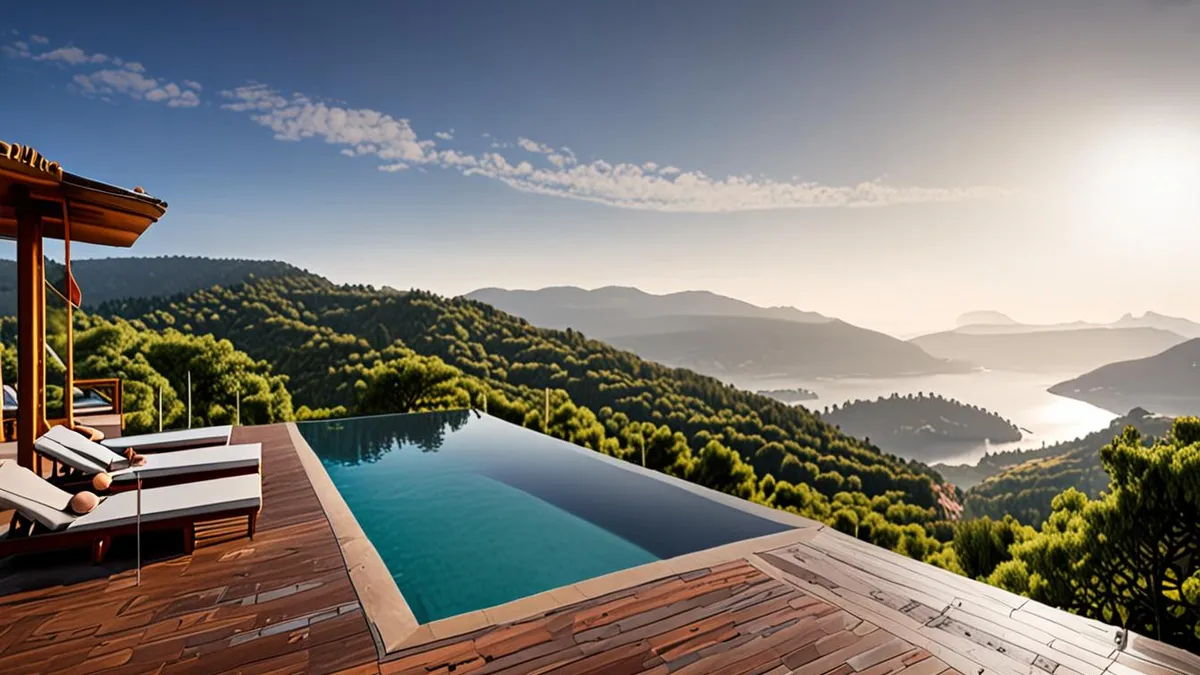
Hillside villas offer elevated panoramas and noticeably quieter surroundings. Being set back from the sand filters out most beach noise, and fewer people wander up the slope. The trade-off is that views can be partly blocked by neighboring units built below you, so a “panoramic” villa might have its sightline to the water clipped by the roof of the villa one terrace down. Study photos and villa positioning carefully.
On the hill, expect more wind, which is pleasant in hot weather but can make evenings chilly. You may also hear occasional shuttle traffic if vehicles serve the slope, though this is far less intrusive than beach-level noise.
Price and Booking: When to Commit
Price is often the deciding factor, and the gap between the two settings is consistent enough to plan around. In the same resort area, expect beachfront villas to run 20-40% above comparable hillside units. On a stay of 4-7 nights, that difference can add up to a meaningful chunk of your budget, often enough to cover flights, excursions or several nice dinners. It’s worth weighing what you’re actually paying for before you commit, since the premium buys location and convenience rather than necessarily a better room.
Timing matters just as much as villa type. For a June to August stay, book 4-6 months ahead to get your pick of locations and rates. If you’re traveling in May or September, booking 1-2 months ahead usually secures a good rate, since demand softens outside peak season and inventory is easier to come by.
- Shoulder-season savings are real: rates in May and September typically run 20-30% below peak-season prices, so shifting your dates by a few weeks can shrink the beachfront premium considerably.
- Hillside units discount deepest: resorts are often more flexible on slope-side pricing when occupancy dips, so hillside villas frequently see the largest percentage drops in quieter months.
- Same resort, two budgets: comparing villa types within one resort area keeps the price gap meaningful, since a budget hillside villa at a luxury property can cost more than a beachfront unit at a simpler one nearby.
If your dates are fixed and fall in high season, commit early. Waiting for a last-minute deal on a beachfront villa in July rarely works out, and you’ll usually end up choosing from whatever hillside units remain. If you’re flexible, though, a shoulder-season trip lets you test the hillside setting at a lower price, and you can always splurge on beachfront for a future stay once you know which atmosphere suits you best.
Getting Around: Access, Steps and Daily Logistics
The biggest practical difference between the two settings shows up after breakfast, when you actually have to get somewhere. A hillside villa sits 30-150 meters above sea level in typical resort destinations, and that elevation shapes every trip you make down to the sand or up to dinner. It also shapes how much energy you have left for the afternoon. Before you book, it pays to think through your daily routine honestly: how many times you plan to walk to the beach, whether you will want to pop back to your room during the day, and how comfortable everyone in your group is with stairs and slopes.
- Count the climb. Hillside villas usually require a 5-10 minute walk, a set of stairs or a resort shuttle to reach the beach and restaurants. In heat or after a long swim, even a short climb feels longer than it sounds.
- Ask about shuttle frequency. Some resorts run shuttles every few minutes; others operate on request with waits that can stretch well past ten minutes. Ask the resort directly how often it runs and until what time in the evening.
- Check luggage handling. Getting suitcases, strollers or beach gear up a slope is nobody’s idea of a holiday. Confirm whether staff will move your bags for you on arrival and departure day.
- Match the terrain to your group. Families with small children and travelers with limited mobility should describe their needs to the resort before booking a slope-side villa, not after. A short phone call now can save a frustrating week later.
- Think about midday trips. Beachfront villas let you return to your room easily during the day for naps, sunscreen or a swim. On a hill, each forgotten item means another climb, so pack a small beach bag with everything you might need.
None of this makes hillside villas a bad choice; it just means the logistics deserve a phone call or an email before you commit. Resorts are generally happy to answer questions about access, and their answers will tell you a lot about how your stay will actually feel day to day. If a resort gives vague replies about shuttle times or luggage help, treat that as useful information in itself. Clear, specific answers usually signal a property that has thought about its hillside guests, while hesitation suggests you should budget extra patience for the climb.
Matching the Villa Type to Your Travel Style
The right villa depends less on the view and more on how you spend your days. A family racing between sandcastles and snack breaks has very different needs from a couple planning long, slow mornings on a terrace. Think about who is traveling, how long you are staying and what you want to remember from the trip.
Families with young children and keen swimmers usually benefit most from a beachfront villa. Direct access to the sand means you can pop back for naps, dry towels or a forgotten bucket without turning it into an expedition. Swimmers also appreciate being steps from the water for early morning or late afternoon sessions when the light is soft and the beach is quiet.
Couples and remote workers often prefer hillside villas, especially over a 4-7 night stay. The quiet, the elevated views and the lower rates make it easier to settle into a rhythm, whether that is a morning of focused work or an evening with a drink as the light changes. If you want proof of how dramatic elevated light can be, this piece on a Molde fjord panorama at morning and sunset shows what height adds to a view.
- Photographers and sunset seekers: an elevated hillside terrace catches more dramatic light than sea level, with sunsets that sweep across the horizon rather than ending at the waterline.
- Light sleepers: hillside settings sit away from wave noise and beach activity, which can make a real difference if you turn in early.
- Budget-conscious travelers: hillside units often carry the deepest discounts, freeing up money for excursions or a longer stay.
Whichever type you lean toward, be honest about your priorities before you book. Match the setting to your daily routine rather than the brochure photo, and the villa will feel right from the first morning.
Which Beachfront Villa Setup Fits Your Budget
Beachfront villas carry a meaningful premium over comparable hillside villas in the same resort area, and that price gap is the single biggest factor in most booking decisions. If it stretches your budget, a hillside villa is not a compromise so much as a reallocation. Book the hillside unit and put the difference toward boat trips, diving, dinners out or simply a few extra nights.
Try a split stay
One of the best-kept tricks is the split stay. Book the first few nights beachfront to enjoy the sand-and-swim phase of your trip, then move hillside for the rest, spending your days on the terrace and your evenings watching the light change. This works best within a 4-7 night trip, long enough to settle into both settings without the move feeling like a hassle. Ask the resort to arrange the transfer and luggage handling; most will do it gladly if you book both stays with them.
Check what the rate actually includes
Before committing to a beachfront rate, confirm whether it covers beach loungers, umbrellas and equipment like kayaks or snorkels. In peak season, these extras add up quickly, and two loungers plus gear for a family can quietly turn a good rate into an expensive one. A short email to the resort before booking settles the question and helps you compare offers on a like-for-like basis. Whichever setup you choose, knowing the true total cost is what makes the budget work.
The Bottom Line: Picking With Confidence
So, beachfront or hillside? If waking up steps from the sand matters most to you, beachfront villas deliver access and energy. If you would rather wake up above it all, hillside villas trade that convenience for sweeping views, quiet evenings and a lower price.
The decision really comes down to three things: your trip length, your mobility needs, and whether the beachfront premium fits your budget. Once you know those answers, the right choice usually becomes obvious. Whichever way you lean, book 4-6 months ahead for a summer stay to lock in the setting you actually want. If this guide helped you sort out your pick, leave a comment or share it with someone planning the same trip.